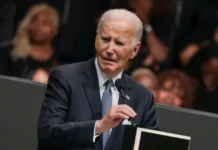
Former President Joe Biden’s aggressive prostate cancer diagnosis has brought with it not only an outpouring of support from across the political spectrum but also a wave of introspection within the Democratic Party. As he begins treatment and considers options to manage a disease already metastasized to his bones, a political reckoning looms—one that cuts to the heart of transparency, leadership, and the party’s handling of Biden’s final years in office.
The announcement from Biden’s personal office on Sunday was as stark as it was sobering. After experiencing escalating urinary symptoms, the 82-year-old was diagnosed with prostate cancer marked by a Gleason score of 9 (Grade Group 5)—a clinical marker of the cancer’s most aggressive form. More troubling still, the cancer had already spread to the bone, signaling a late-stage diagnosis. Although Biden’s team emphasized that the disease appears hormone-sensitive, allowing for targeted therapy, the clinical picture is unmistakably serious.
“Cancer touches us all,” Biden posted to X. “Jill and I have learned that we are strongest in the broken places.”
The former president’s diagnosis drew instant and heartfelt responses—even from some of his most consistent critics. President Donald Trump and Melania Trump issued a public statement wishing Biden “a fast and successful recovery.” Similarly, Rep. Marjorie Taylor Greene, Speaker Mike Johnson, and other top Republicans set aside past partisan rancor to offer support.
Prominent Democrats, too, rallied quickly around Biden. Vice President Kamala Harris, Barack Obama, Hillary Clinton, and Nancy Pelosi all issued statements of admiration and solidarity, praising Biden’s decades-long commitment to cancer research—especially through the Cancer Moonshot initiative he launched in memory of his late son, Beau Biden.
Still, the supportive tone cannot obscure the underlying controversy now bubbling back to the surface. As Rep. James Clyburn (D-SC) acknowledged on CNN’s State of the Union, questions are now inescapable: Was Biden ever fully up to serving another four years? And did key figures in the Democratic Party—and especially in Biden’s inner circle—conceal the extent of his decline?
“There very well could have [been a cover-up],” Clyburn admitted when asked whether hiding Biden’s condition contributed to the party’s plummeting poll numbers.
The concern has only intensified with the looming release of Original Sin: President Biden’s Decline, Its Cover-up, and His Disastrous Choice to Run Again—a book that reportedly documents internal efforts to suppress concerns about Biden’s cognitive and physical health during his re-election bid. Fueling the fire, Axios recently released audio of Biden’s special counsel interview in which he struggled to recall dates, including the death of his own son.
For Biden, health concerns are not new. From colonoscopies to polyp removals to rigorous annual checkups, his medical history has been scrutinized for decades. His last presidential physical in February 2024 declared him a “healthy, active, robust 81-year-old.” But such clinical statements now appear dangerously optimistic given the cancer’s stage.
Experts say the type of prostate cancer Biden has is not rare, but its aggressiveness and metastasis make management far more complex. Dr. Chris George of Northwestern Medicine emphasized that, if the cancer responds to hormone therapy, Biden could still live for several years. But such outcomes are highly individualized, especially at age 82.
Adding to the complexity is the fact that routine PSA testing is often discouraged in men over 70, unless special circumstances justify it. In Biden’s case, as Dr. Kavita Patel explained, his position and family history likely should have warranted a proactive approach.