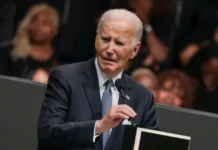
Justice Ketanji Brown Jackson may have just crystallized the core divide in one of the most important constitutional debates of our time — and in doing so, underscored the philosophical collision at the heart of Trump v. Slaughter, a case that could redraw the map of executive power in America.
During oral arguments, Jackson forcefully defended the independence of federal agencies, warning that allowing the president to fire non-partisan experts — scientists, economists, PhDs — could open the door to dangerous politicization. In her view, these agencies are not rogue bureaucracies in need of presidential discipline, but carefully constructed bodies that serve as firewalls between political power and expert governance.
It’s a vision rooted in the modern administrative state — a belief that Congress, not the president, should be the primary steward of these institutions. And her comments make clear she sees the independence of agencies like the FTC or the Federal Reserve not as a loophole in the Constitution, but as a feature designed to protect American citizens from impulsive or politicized interference from the White House.
SCOTUS: Justice Ketanji Brown Jackson told the Court that presidents should not be able to fire the PhDs & experts who run the government. She even argued presidents should avoid control over transportation & the economy.
In a remarkable exchange in Trump v Slaughter, Justice… pic.twitter.com/sXQesOSdKG
— @amuse (@amuse) December 8, 2025
But that’s not how the Constitution reads to critics of the administrative state — including those in the Trump legal orbit. For them, the president, elected by the people, is the only figure in the executive branch who carries direct democratic legitimacy. If he can’t control who works for him — especially in policy-setting agencies — then the will of the voters is being undermined by unelected technocrats with lifetime job security.
This case, Trump v. Slaughter, originated from Trump’s removal of former FTC commissioner Rebecca Kelly Slaughter. The legal question seems narrow on the surface: Can the president fire independent agency officials at will? But the implications run deep — potentially reshaping how every future administration interacts with powerful institutions like the Federal Reserve, the SEC, the NLRB, and more.
Justice Jackson’s framing is blunt and evocative: “Having a president come in and fire all the scientists, and the doctors, and the economists, and the PhDs, and replacing them with loyalists and people who don’t know anything,” she warned, “is actually not in the best interest of the citizens of the United States.”
To some, that sounds like a defense of expertise and stability. To others, it sounds like an argument for an unaccountable bureaucracy immune from public control.
And therein lies the tension. If Congress creates an agency, funds it, and outlines its scope, is it not ultimately Congress — not the president — that should oversee it? Jackson clearly thinks so. But the counterargument, raised by Trump’s legal team and echoed by several justices, is that the Constitution’s separation of powers demands presidential control over the executive branch — even over those Congress calls “independent.”
Justice Kavanaugh, notably, seemed skeptical of Jackson’s reasoning, pressing the idea that too much agency independence risks violating basic constitutional design. And based on the tone of the Court, most observers expect a ruling in favor of Trump’s view — limiting the insulation of agency heads and expanding presidential firing authority.