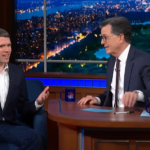
Texas Democratic Senate candidate James Talarico reportedly knew in advance that his interview with Stephen Colbert’s “The Late Show” would not air on television, according to reporting from The New York Times. The segment, recorded during a trip to New York last month, ultimately appeared only on YouTube, where it quickly went viral.
According to the report, Colbert’s producers informed Talarico’s team several days before the taping that CBS planned to release the interview online rather than broadcast it on television. Despite knowing this ahead of time, Talarico’s campaign moved forward with the appearance.
The strategy appears to have paid off in terms of visibility. Once released online, the interview quickly gained traction, drawing more than 9 million views on YouTube. The exposure also coincided with a surge in donations to Talarico’s campaign.
Campaign adviser Chuck Rocha told the New York Times that some of the fundraising boost was later used to fund Spanish-language advertising.
“A lot of that money we got in late from Colbert went to Spanish advertising,” Rocha said.
On the show itself, however, Colbert told viewers a different explanation for why the interview wasn’t broadcast. He said CBS lawyers had told the show “in no uncertain terms” that Talarico could not appear on television, suggesting legal concerns were behind the decision.
This is the interview Donald Trump didn’t want you to see.
His FCC refused to air my interview with Stephen Colbert.
Trump is worried we’re about to flip Texas. pic.twitter.com/BCev5jZbKc
— James Talarico (@jamestalarico) February 17, 2026
CBS later pushed back on that characterization. According to the network, the show received legal guidance regarding Federal Communications Commission equal-time rules, which require broadcasters to offer comparable opportunities to political candidates. CBS said the program itself chose to release the interview on YouTube instead of airing it.
The episode drew criticism from some officials and commentators. FCC Chairman Brendan Carr dismissed the situation as a “hoax.”
“Yesterday was a perfect encapsulation of why the American people have more trust in gas station sushi than they do in the national news media,” Carr told reporters, according to Fox News.
Carr also suggested the situation appeared orchestrated when questioned about the sequence of events.
Meanwhile, Talarico’s Democratic primary opponent Rep. Jasmine Crockett acknowledged the strategy may have helped him politically. She described the online-only approach as “a good strategy” that likely boosted Talarico’s campaign.
Talarico’s team promoted the interview heavily on social media after its release. The campaign announced it had raised $2.5 million within 24 hours, referring to the video as Talarico’s “censored” interview in a press release.
Talarico himself posted online describing it as “the interview Donald Trump didn’t want you to see.”