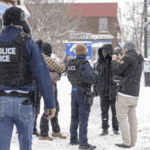
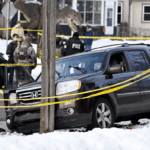
The shooting of Renee Nicole Good in Minneapolis has ignited a political firestorm with all the volatility of a lit match in a dry field. At the center: a 37-year-old woman, a federal enforcement action, and an administration unwilling to back down from the rule of law—no matter how loud the political outrage becomes.
Homeland Security Secretary Kristi Noem laid the foundation Wednesday with a blunt assessment: Good had spent the day “stalking and impeding” ICE agents as they carried out operations targeting violent offenders in the Twin Cities. According to Noem, Good was repeatedly warned to stop interfering, exit her vehicle, and cease obstructing the agents. She didn’t. Instead, video footage shows her in the middle of a residential street, telling agents to “go around” before quickly reversing and attempting to flee. Moments later, she was shot. Homeland Security is now calling the incident an act of “domestic terrorism,” asserting that she used her vehicle as a weapon and attempted to run an officer over.
But while the federal account leans heavily on facts already supported by video footage, Democrats wasted no time in declaring the shooting unjustified. Minneapolis Mayor Jacob Frey dismissed DHS’s version of events as “bulls—.” Governor Tim Walz, despite having seen the same footage, accused DHS of pushing “propaganda,” and pledged a state-led investigation to ensure “accountability and justice.”
CNN’s Erin Burnett as she shows the video of a car trying to ram into an ICE officer:
“He was bumped by the vehicle.”pic.twitter.com/BnPMCeMaRN
— Media Research Center (@theMRC) January 8, 2026
Here’s the uncomfortable truth: the footage, far from being some murky grainy clip, clearly shows ICE agents approaching Good’s car, issuing commands, and being met with resistance. Her rapid movements behind the wheel—especially reversing while agents were near the vehicle—triggered the agent’s defensive response. The law, whether critics like it or not, is clear: a vehicle used as a weapon is grounds for the use of deadly force.
But instead of grappling with that legal reality, Capitol Hill erupted into partisan fury. Rep. Alexandria Ocasio-Cortez labeled the shooting a “cold-blooded murder,” and insisted that ICE is “accountable to no one.” Calls to defund or dismantle the agency re-emerged with predictable speed, as if the shooting of a non-compliant citizen interfering in a federal operation is somehow a new concept in law enforcement.
Vice President JD Vance, for his part, made it clear that ICE officers won’t be thrown under the bus. “To the radicals assaulting them, doxxing them, and threatening them: congratulations, we’re going to work even harder to enforce the law,” he posted on X.
That, in a sentence, is the defining contrast of this moment: one side treating law enforcement officers as expendable villains; the other reaffirming that those tasked with upholding federal law will not be sacrificed on the altar of political outrage.
There will be investigations. There will be protests. But there must also be clarity: when law enforcement gives a lawful command, and someone escalates to using a vehicle as a weapon, the responsibility for what happens next doesn’t rest solely with the officer.
The law applies—or it doesn’t. That’s the question facing the country now. Not whether the optics are favorable, not whether emotions are raw—but whether we still recognize that consequences follow actions, and that law enforcement must be allowed to act before someone ends up dead—including one of their own.