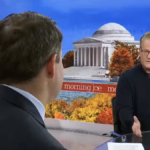
Pennsylvania Governor Josh Shapiro unleashed a blistering critique this week of what he mockingly referred to as President Donald Trump’s “big, beautiful bill” — a sweeping piece of Republican-backed legislation currently advancing through Congress. The bill, still in the markup stage, has drawn fierce opposition from Democrats who argue its provisions will result in catastrophic social and economic fallout. But Shapiro’s statement — layered with rhetorical barbs and impassioned statistics — signals that this fight is more than just another budget battle. It’s a referendum on the priorities of Trump’s second term.
According to Shapiro, the bill’s consequences are not abstract — they’re devastatingly personal. “11.8 million people off of health care,” he says, including 310,000 Pennsylvanians who rely on Medicaid. Critics of the bill argue that this isn’t simply about reducing government bloat, as Republican lawmakers have framed it, but about stripping life-saving coverage from working-class families.
Shapiro also notes that the argument often used to justify such cuts — that undocumented immigrants are gaming the system — falls flat in states like Pennsylvania, where it’s illegal for them to access Medicaid and where enforcement against fraud is considered among the toughest in the nation.
The attack continues: over 7 million people, including 2 million children, stand to lose food assistance. In Pennsylvania alone, 140,000 recipients would reportedly be affected. Shapiro frames this not just as a moral failure, but an economic one — hitting farmers and food producers who rely on these programs to stabilize demand.
Shapiro is now taking credit for this funding, part of the One Big Beautiful Bill, which no Democrats voted for and Shapiro himself attacked (with taxpayer resources) Republicans for supporting. https://t.co/yi0g1nIG2u
— NathanBenefield (@NathanBenefield) January 4, 2026
Then comes the fiscal paradox: despite Republican messaging about deficit reduction, Shapiro points to the Congressional Budget Office’s own analysis, suggesting the bill would add a staggering $3.3 trillion to the national deficit. It’s a number that undermines the very talking points Trump and his allies used to rally voters in both 2016 and 2024.
Perhaps most politically charged is the governor’s claim that the bill directly threatens thousands of Pennsylvania jobs — many of them union positions in the state’s energy sector. As the second-largest net energy exporter in the nation, Pennsylvania has long been a bellwether for how energy policy plays out in the real world. Shapiro warns that the bill’s provisions — higher taxes, reduced funding for affordable energy initiatives — would kneecap growth and lead to rising utility costs for average residents.
At its core, Shapiro’s argument is that the bill represents a betrayal — not just of traditional Democratic constituencies, but of the very working-class voters Trump claimed to champion. Medicaid, SNAP, energy jobs, and deficit reduction were once the campaign promises. Now, in Shapiro’s telling, they are the first sacrifices on the altar of a rushed, ideologically driven legislative agenda.
But perhaps the most pointed question Shapiro poses isn’t about the numbers. It’s about the timing: “Why are they pushing so hard to screw over so many people who voted for this President?” In a Congress defined by gridlock, urgency is a choice. And if this bill becomes law, the backlash won’t just be about budgets — it will be about broken promises, and the price of loyalty repaid in cuts.