Artificial intelligence and the enormous data centers required to support it have become an unexpected issue in Democratic politics, with several Michigan candidates campaigning on aggressive restrictions on the industry and emerging victorious in their primaries.
The results involve more than a dispute over new technology. Data centers require substantial amounts of electricity, water and physical infrastructure, placing AI development directly into debates that have traditionally centered on energy, environmental policy, utility costs and local control.
Abdul El-Sayed defeated Rep. Haley Stevens for Michigan’s Democratic Senate nomination despite roughly $65 million in spending in the primary, according to The Intercept.
El-Sayed made government intervention in artificial intelligence a significant part of his campaign. His published AI platform calls for public ownership in the industry, placing him well beyond proposals centered merely on regulating data centers.
His environmental positions are similarly expansive. El-Sayed has opposed fossil fuels and received support from organizations including Oil Change Action and Friends of the Earth Action.
He wasn’t the only Michigan Democrat to make AI infrastructure an issue.
William Lawrence won the Democratic nomination in a competitive House district after advocating a federal moratorium on data-center construction. Lawrence’s connection to the environmental movement predates the current AI debate: He co-founded the Sunrise Movement, the climate organization closely associated with the push for the Green New Deal.
Donavan McKinney, meanwhile, defeated an incumbent Democratic congressman in Detroit while opposing data centers. Before entering elected politics, McKinney worked as a political director for Climate Power, an organization focused on climate and clean-energy advocacy.
A similar debate surfaced in neighboring Wisconsin, where another data-center opponent narrowly missed winning a Democratic primary.
The overlap between environmental activism and opposition to AI infrastructure is not difficult to explain.
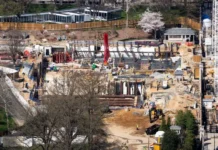
Modern data centers can consume extraordinary amounts of electricity. Some also require substantial quantities of water for cooling. Their construction can provoke fights over land use, utility infrastructure, tax incentives and whether ordinary customers could eventually bear some of the costs of expanding electrical generation and transmission.
Those are concrete concerns rather than theoretical objections to technology.
They also create unusual political coalitions. A conservative homeowner worried about electricity rates or a large industrial project nearby may find himself opposing the same data center as an environmental organization, despite disagreeing profoundly with that organization about fossil fuels, climate policy or economic regulation.
That doesn’t necessarily mean those voters share the broader agendas of the candidates or organizations involved.
The policy question therefore extends beyond whether someone is simply “for” or “against” AI.
One proposal intended to address ratepayer concerns is the Ratepayer Protection Pledge, which calls for AI companies to build, bring or purchase the power required for their facilities rather than shifting infrastructure costs onto existing utility customers.
Tax incentives are another point of contention. Given the extraordinary valuations and capital available to leading technology companies, critics across the political spectrum have questioned whether governments need to offer generous tax concessions to persuade them to construct data centers.
Communities hosting the facilities can also demand clearer economic benefits before approving development.
Those debates differ substantially from prohibiting construction altogether.
The Michigan results demonstrate that calls for sweeping intervention in AI now have an electoral constituency inside the Democratic Party. They also show how an emerging technological issue can revive older political networks and tactics.
Local permitting battles, environmental objections, proposed construction moratoriums and litigation have all been used extensively in previous fights over pipelines, drilling, power plants and other major infrastructure.
AI is now entering that same arena.