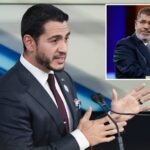
Tensions within the Democratic Party escalated this week as Rep. Adam Smith (D-WA) publicly distanced the party from Zohran Mamdani, a New York City mayoral candidate whose far-left positions have drawn national scrutiny and internal backlash—particularly over his views on private property and Israel.
Speaking on Fox News Sunday, Smith made clear that Mamdani “isn’t speaking for our party,” and dismissed any suggestion that the mayor of New York—regardless of who holds the office—has ever represented the party’s broader direction.
“It’s a big tent,” Smith said, referring to the Democratic coalition. “It’s a big coalition,” he added, before pivoting to attack President Donald Trump over immigration enforcement.
The comments come amid growing alarm among moderate and Jewish Democrats, who have condemned Mamdani for his refusal to denounce inflammatory rhetoric and his ambiguous stance toward Israel.
In particular, Mamdani has declined to condemn the phrase “globalize the intifada,” a slogan widely associated with calls for violent resistance against the Israeli state. Critics argue that such language crosses the line from protest into legitimizing extremism.
Rep. Debbie Wasserman Schultz (D-FL), one of the most prominent Jewish Democrats in Congress, issued a blunt assessment: “To not be willing to condemn the term ‘globalize the intifada,’ it just demonstrates his callous disregard for antisemitism, terrorist activity.”
She continued, “Anyone that I care about couldn’t possibly distance themselves from him more. It’s really terribly disturbing and potentially dangerous.”
Other Jewish Democrats echoed her concerns. Rep. Brad Schneider (D-IL) accused Mamdani of “gaslighting the public” when he described the slogan as a peaceful call. Rep. Jared Moskowitz (D-FL) added, “If he can’t say that ‘globalizing the intifada’ is antisemitic, then obviously he’s going to continue to add to the problem, not deflate it.”
Mamdani, a Democratic Socialist and state assemblyman, has aligned himself with other progressive figures who frequently challenge U.S. foreign policy, capitalism, and law enforcement. But his proximity to real electoral power in New York City has ignited pushback even from within his own ideological coalition.