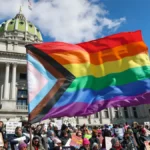
Pittsburgh’s annual Pride celebration is running into a hard financial wall this year, and the gap is not subtle. Organizers say they’ve raised about $150,000 toward a $500,000 goal, a pace that falls well short of where they typically stand with less than two months to go before the June event.
The difference this time is the sponsor list. Several major corporate backers that previously helped fund the event have either declined to contribute or have not committed funds.
While companies like Macy’s and American Eagle are still on board, others—including Walmart and Tito’s—have stepped back, at least for now. Their public explanations are measured, pointing to shifting priorities or broader distribution of charitable support rather than any direct rejection of the event itself.
For organizers, the impact is immediate and practical. Pride events at this scale are not inexpensive productions. Basic infrastructure—stages, lighting, security, insurance—quickly consumes large portions of the budget. One estimate puts stage costs alone above $100,000, before adding the rest of the operational requirements. Without sufficient funding, those elements don’t disappear; they get reduced, delayed, or cut entirely.
That reality is already shaping internal discussions. Organizers say decisions about scaling back will likely begin in May if additional funding doesn’t materialize. The event is still scheduled to go forward, but the version that ultimately takes place may look very different from previous years.
There’s also a broader context hovering over the situation. Last year saw similar sponsor pullbacks, and some organizers have linked that trend to a changing corporate climate around public-facing social initiatives.
Whether that reflects political pressure, brand recalibration, or simple budget decisions varies by company, but the outcome is the same at the local level: fewer large checks underwriting major events.
What remains uncertain is how much of the gap can be closed through alternative sources—vendors, grants, and smaller donors. Organizers say reaching even $200,000 would allow for a scaled-down version to proceed with essential components intact.
For now, the event is not canceled, but it is operating under tighter constraints than in previous years. The next few weeks will determine whether it remains a full-scale production or shifts into something more limited by necessity rather than design.