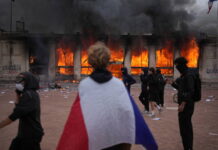
It has been more than five years since the George Floyd demonstrations tore through Minneapolis, leaving lasting scars on the city and a permanent mark on the national psyche. Yet this week, Minnesotans once again found themselves watching familiar scenes unfold as protests erupted over ICE enforcement actions in the Twin Cities. History may not repeat itself precisely, but it often rhymes, and the cadence of this moment is unmistakable.
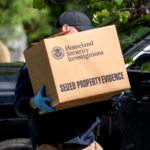
The current unrest traces back to a confrontation that quickly became a political accelerant. Left-wing activists escalated their rhetoric after Renee Good attempted to interfere with an ICE operation and was shot and killed when she drove her vehicle toward an agent in what authorities described as a threatening manner. The facts of the incident were almost immediately eclipsed by online calls for “uprisings” and sweeping denunciations of federal law enforcement, resurrecting the same language that once turned protest into catastrophe.
I think it’s important to point out: ICE does NOT have the same authority as a police officer. They do NOT have the power to enforce laws, only to engage in their specific tasks.
IE: they don’t do traffic, etc. impeding traffic is not a penalty ICE can enforce against
— Adam Kinzinger (Slava Ukraini) 🇺🇸🇺🇦 (@AdamKinzinger) January 11, 2026
What followed was less a grassroots response than a familiar institutional maneuver. Having failed to stop President Trump at the ballot box and finding limited success in Congress, Democrats have leaned heavily on the judiciary as their primary counterweight to his second-term agenda. Temporary restraining orders and injunctions have become the weapon of choice, delivered by sympathetic district judges with remarkable frequency. By recent counts, there have been hundreds of legal challenges to administration policies, with court rulings landing against the White House almost daily.
On Monday, Minnesota’s Attorney General Keith Ellison joined that trend, announcing a lawsuit against the Department of Homeland Security. The filing names a wide range of federal officials and agencies, accusing the administration of unleashing an “unlawful” enforcement surge that has allegedly destabilized the Twin Cities. At a news conference, Ellison framed the operation as a “federal invasion,” lacing his remarks with claims of racism and constitutional violations.
You’re going to get more people killed by spreading lies like. Do you care at all? https://t.co/fv06Qfw1qm
— Bonchie (@bonchieredstate) January 13, 2026
The argument rests on a selective reading of federalism. Suddenly, the Tenth Amendment is rediscovered and invoked as a shield against federal law enforcement carrying out federal law. This constitutional epiphany, however, tends to vanish when progressives are in power and eager to nationalize healthcare, education, policing standards, or election administration. The Supremacy Clause and the federal government’s clear authority over immigration enforcement do not cease to exist because a state finds enforcement politically inconvenient.
Ellison’s assertion that Minnesota is being targeted for its “diversity” rings hollow to critics who see the state as a long-standing example of permissive policies, lax oversight, and unresolved fraud scandals. In that context, increased federal attention appears less punitive than predictable.
ICE Can enforce any federal law.
They can arrest you for tax evasion, interstate trafficking, and above all else and most obviously obstructing federal law enforcement and evading arrest https://t.co/GiTzGr584A pic.twitter.com/7Z4UKSKBxr
— Tim Pool (@Timcast) January 13, 2026